
In Vermont, wood heat is a way of life, and the difference between a warm, safe fire and a smoky, disappointing one often comes down to how the wood was prepared. Wet wood burns poorly, wastes energy, and builds up creosote in the chimney. Properly seasoned firewood lights easily, burns hot and clean, and keeps your stove and chimney in better shape. Seasoning takes time, but the steps are simple. Here’s how to cut, stack, and store wood so it’s ready when the temperature drops.
Why Seasoned Firewood Matters and How Long It Takes
Freshly cut green wood can hold close to half its weight in water, and a fire has to boil that water away before the wood can burn well. That wastes heat, produces smoke, and leaves creosote that can lead to chimney fires. Seasoned firewood has dried to around twenty percent moisture or less. Most split hardwood needs six to twelve months to season, and dense species such as oak can take longer. Softwoods dry faster. Hardwoods such as maple, ash, and beech burn long and hot, while softwoods such as pine burn quickly and are better for kindling and mild weather. Cutting and splitting wood in spring gives it the full summer to dry, so it’s ready to burn the following winter. In cool, humid climates like Vermont’s, dense species can take longer, so plan on at least a full year and keep a rolling supply of two years if you can.
Split, Stack, and Cover the Right Way
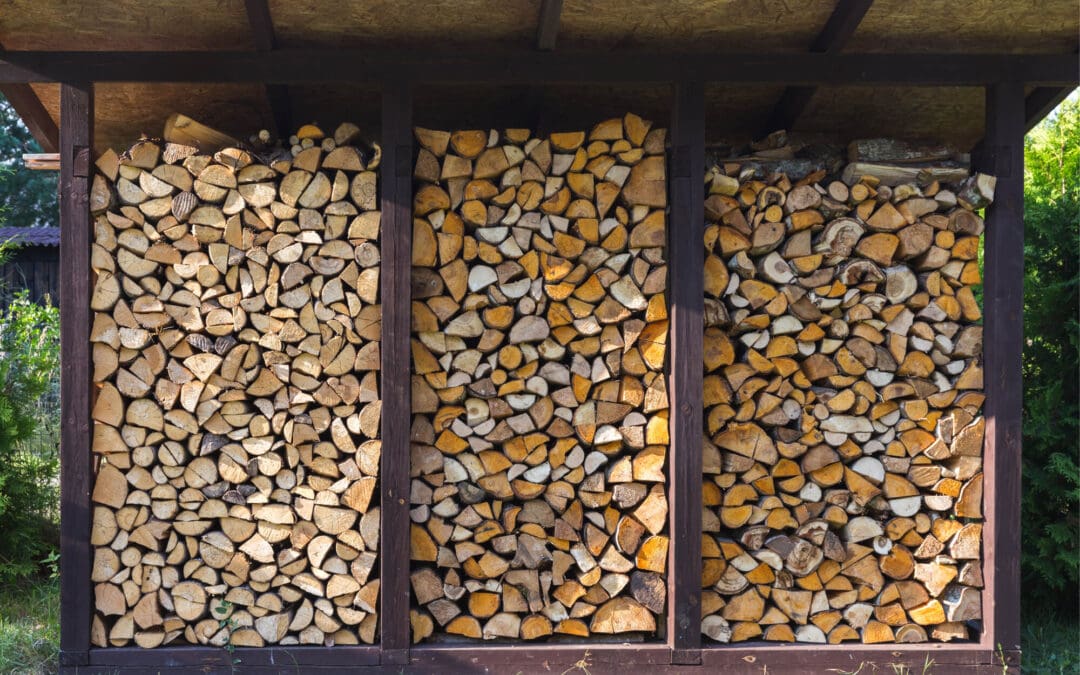
Split wood soon after cutting, since splitting exposes the inside and speeds drying. Make a few sizes to suit different needs, with smaller pieces for starting fires and larger splits for overnight burns. Pieces about four to six inches across season best. Stack the wood in single rows on pallets or rails so it sits off the ground, and leave a few inches between rows for airflow. Choose a sunny, windy spot, which helps moisture escape. Cover only the top of the stack with a tarp or metal sheet, leaving the sides open so air can move through, so your seasoned firewood is ready by winter. Wrapping the whole pile in plastic traps moisture and slows drying. Stacking the top row bark side up helps shed rain.
Check That Your Seasoned Firewood Is Truly Dry
Don’t guess. A moisture meter gives a quick, reliable reading when you split a piece and press the probes into the fresh face. If you compare a seasoned piece with an unseasoned one in your hands, you’ll feel the difference immediately. Aim for twenty percent or lower. Dry wood also has visible clues: it’s lighter, the ends are gray and cracked, and the bark may be loose. When you knock two pieces together, dry wood makes a sharp, hollow sound, while wet wood sounds dull. If a log hisses or sizzles on the fire, or you see steam coming out of the ends, it needs more time.
Store It Safely Near the Home
Keep the main stack at least twenty feet from the house and off the ground, since stacked wood can attract termites, carpenter ants, and mice. Keep the area around the stack free of tall grass and debris so air can circulate. Bring only a few days of wood indoors at a time so it can warm up, and keep it away from the stove. A woodshed or covered porch with open sides is ideal, and a rack near the stove keeps the day’s supply neat and dry. Keep ashes in a metal container with a lid and set it outside on a non-combustible surface until completely cold. Burn local wood when you can, because moving firewood long distances can spread invasive insects, and Vermont officials discourage it. If you buy wood, ask the seller whether it is truly seasoned firewood, and check it with a meter yourself before you stack it.
Frequently Asked Questions (FAQs)
How long does it take to season firewood?
Six to twelve months for most split hardwoods, and longer for dense woods like oak. Start early in the year so the wood has the full summer to dry.
Can I burn green wood?
It’s not recommended. Green wood burns poorly, makes more smoke, and increases creosote buildup that raises the risk of a chimney fire.
Is kiln-dried wood better?
It’s dry and ready to burn, though it costs more. It’s useful for starting fires or when you run short of seasoned wood late in the winter.
Should I cover the entire stack?
No. Cover only the top, and leave the sides open for airflow so moisture can escape from the wood.
What moisture level should I aim for?
Twenty percent or lower, measured on a freshly split face with a moisture meter. Higher readings mean the wood needs more drying time.
CheckPoint Property Inspections offers home inspection services to buyers and sellers in Burlington, Vermont, and surrounding areas. Contact us to schedule an appointment.
Recent Comments